
Western or Vedic? Why your Sun sign can change
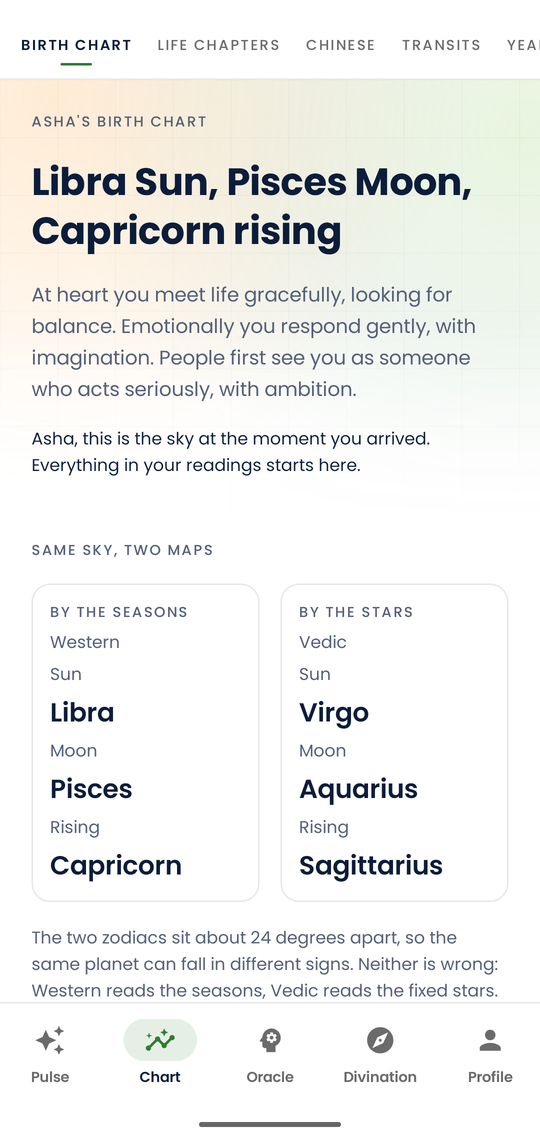
If you are used to Western horoscopes and then look at a Vedic (Jyotish) chart, you will probably find that your Sun sign has moved back by one. You did not change, and neither chart is wrong. They measure the sky from two different starting points.
Two zodiacs
- The Western (tropical) zodiac is tied to the seasons. Aries begins at the spring equinox.
- The Vedic (sidereal) zodiac is tied to the fixed stars. Its signs sit about 24 degrees behind the Western ones today.
The gap exists because the Earth's axis slowly wobbles, a drift called precession, so the equinox slides against the stars over thousands of years. Western astrology kept the seasons as its anchor. Vedic astrology kept the stars.
What this means for you
A sign is 30 degrees wide, so a 24-degree gap moves the Sun into the previous sign for most people, roughly four in five. Someone born when the Sun was in the last few degrees of a Western sign may keep the same sign in both.
The Moon and the Rising sign can shift too, and the Vedic chart also uses its own timing system, the daśā, to describe life chapters.
Which should you follow?
Both are traditions with centuries of use, and they ask slightly different questions. Western astrology tends to speak about personality and psychology. Vedic astrology is known for timing and life chapters. There is no need to pick a winner.
In Netruve you choose which one the app follows when you set up, and you can change it in Settings. The chart page shows both side by side, so you can see exactly where they differ. The Vedic side follows the classical text, and where a popular program disagrees with it, we follow the text.
Netruve is for reflection and entertainment. It is not medical, legal, financial or mental-health advice. Read the disclaimer.
More to read
Why your chart stays on your phone
Most astrology apps send your birth date, time and place to a server. Netruve works everything out on the device. Here is what that means and why we built it that way.
How to read your daily Pulse
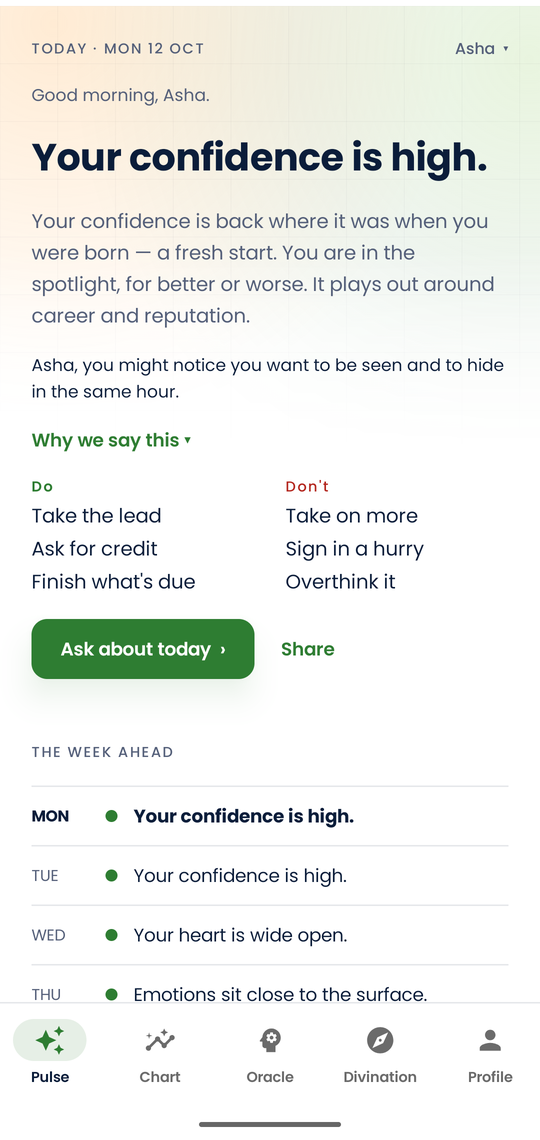
Pulse is the short reading that opens Netruve each morning. A quick guide to what it shows, what the areas mean and how to see the reasons behind it.